
Planning a trip to Bali is exciting — beaches, temples, waterfalls, volcanoes, rice terraces. But one question quietly determines how smooth your vacation will be:
How are you going to get around?
Transportation in Bali works very differently from major cities in Europe, Australia, or North America. There are no subway systems. No island-wide train network. Public buses are extremely limited and not designed for tourists.
Understanding how transportation really works in Bali will save you:
- Time
- Money
- Stress
- Safety risks
This complete 2026 Bali transportation guide explains every option in detail, compares costs realistically, and helps you choose the best solution based on your travel style.
Why Transportation in Bali Requires Planning
Bali may look small on a map, but travel time can be surprisingly long.
For example:
- Canggu to Ubud → 1–1.5 hours
- Seminyak to Uluwatu → 1–2 hours
- Southern Bali to East Bali (Karangasem region) → 2–3 hours
Road conditions include:
- Narrow village roads
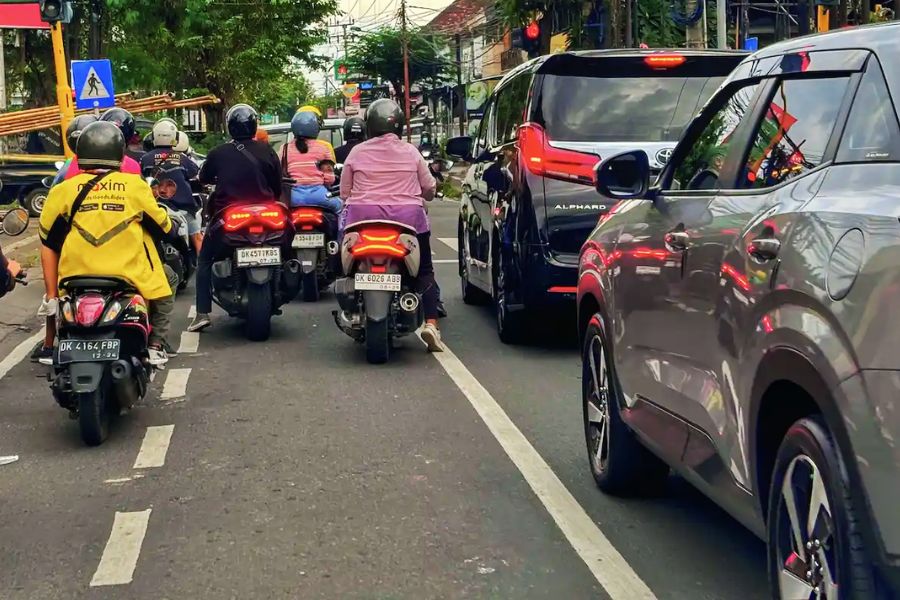
- Heavy motorbike traffic
- Sudden ceremony road closures
- Limited parking near attractions
- Mountain routes with sharp turns
Google Maps estimates are often optimistic — especially during high season.
Transportation planning is not just about moving around. It’s about maximizing your limited holiday time.

Overview of Transportation Options in Bali
Tourists typically choose between:
- Taxi
- Ride-hailing apps (Grab / Gojek)
- Scooter rental
- Self-drive car rental
- Private driver
Each option serves a different purpose.
Let’s break them down carefully.

Option 1: Taxi in Bali
Taxis are widely available in main tourist zones.
The most reputable brand is:
Blue Bird Group
Average Cost
Short ride (10–20 minutes): USD 5–12
Longer ride (45–60 minutes): USD 15–25
Pros
- Metered pricing (with reputable companies)
- Air-conditioned
- Easy to find in busy areas
Cons
- Not ideal for multiple stops
- Traffic increases meter cost
- Some drivers avoid using meters
- Hard to find in remote areas
Taxis work well for:
- Dinner outings
- Short beach trips
- Hotel-to-hotel transfers
But they are inefficient for full-day exploration.
Option 2: Ride-Hailing Apps (Grab & Gojek)
App-based transport is very popular.
- Grab
- Gojek
These platforms offer:
- Car rides
- Motorbike rides
- Food delivery
Average Cost
10–20 minute car ride: USD 4–10
Motorbike ride: USD 2–6
Pros
- Transparent pricing
- Cashless payment options
- Affordable for short trips
Cons
- Restricted in some local areas
- Drivers may cancel
- Limited availability in rural regions
- Not practical for multi-destination day tours
In places like Ubud’s central area, some local taxi associations restrict app pickups.
Grab and Gojek are excellent for short transfers, but unreliable for full-day itineraries.
Option 3: Scooter Rental in Bali
Scooters are the most visible form of transport on the island.
Average Rental Price
USD 5–10 per day
Monthly rental: USD 60–100
Pros
- Cheapest option
- Flexible
- Easy parking
Cons
- High accident risk
- Requires International Driving Permit
- Dangerous during rain
- No luggage space
- Not suitable for families
Bali has one of the highest tourist scooter accident rates in Southeast Asia.
Common issues:
- No helmet usage
- Slippery roads in rainy season
- Unfamiliar traffic patterns
- Sudden braking motorbikes
Scooters are suitable for experienced riders only.
Option 4: Self-Drive Car Rental
Some tourists rent cars without drivers.
Average Cost
USD 25–40 per day (excluding fuel)
Pros
- Private
- Comfortable
- Flexible
Cons
- Must hold International Driving Permit
- Stressful navigation
- Heavy traffic
- Parking challenges
- Different driving culture
Balinese driving style is fluid and informal. Lane markings are often ignored, and motorbikes pass from both sides.
Confident drivers may manage, but many visitors find it stressful.
Option 5: Private Driver in Bali (Most Recommended for Tours)
Hiring a private driver includes:
- Private air-conditioned vehicle
- English-speaking driver
- Flexible schedule
- Waiting time
- Local knowledge
Average Full-Day Cost
USD 55–75 (8–10 hours)
Why It’s Popular
- Fixed price
- Unlimited stops within time
- No parking stress
- Safer than self-driving
- Ideal for families and groups
For travelers planning to visit multiple attractions in one day, this option provides the best value.
Bali Airport Transportation Guide
Bali’s main airport:
Ngurah Rai International Airport
Options from the airport:
- Official airport taxi
- Grab/Gojek (designated pickup zones)
- Hotel transfer
- Pre-booked private driver
Airport transfer cost:
- To Seminyak: USD 20–25
- To Ubud: USD 30–35
- To Uluwatu: USD 25–35
After a long international flight, pre-booking a private driver ensures a smooth arrival without negotiation.
Transportation by Popular Tourist Area
Southern Bali (Seminyak, Canggu, Kuta)
- Grab widely available
- Heavy traffic during sunset
- Good taxi availability
Central Bali (Ubud)
- Ride-hailing available but limited at night
- Best option for day tours: private driver
Eastern Bali (Karangasem Region)
- Limited public transport
- Best accessed via private driver
Northern Bali (Lovina, Munduk)
- Rural roads
- Minimal app availability
- Private driver strongly recommended
Transportation availability decreases as you move away from the south.
How Traffic Affects Daily Itineraries
Traffic peaks:
- 7–10 AM
- 4–7 PM
Sunset routes toward Uluwatu can become heavily congested.
Ceremonial processions occasionally close roads for short periods.
A local driver understands:
- Alternate back roads
- Shortcut timing
- Ideal departure hours
This knowledge can save hours over a multi-day trip.
Safety Considerations for Tourists
Traffic safety in Bali requires awareness.
Most tourist injuries involve scooters.
Risk factors:
- Lack of helmet
- No international license
- Rain
- Alcohol
- Night driving
Car travel with a professional driver significantly reduces accident risk.
Vehicles are more stable in rain and on mountain roads.
Budget Comparison Example (4 People)
Scenario: Visiting 4 attractions from Seminyak.
Taxi per ride average: USD 12
5 rides total: USD 60
Private driver full day: USD 65
Financial difference is minimal. Convenience and safety difference is substantial.
Best Transportation Choice Based on Travel Style
Solo Backpacker
Scooter or Grab
Couple on Holiday
Grab for short trips + private driver for tours
Family with Children
Private driver recommended
Honeymoon Travelers
Private driver for comfort and flexibility
Elderly Travelers
Private driver only
Long-Term Digital Nomads
Scooter (if experienced) + occasional driver for long routes
Seasonal Impact on Transportation
Dry Season (April–October)
- Higher demand
- More traffic
- Advance booking recommended
Rainy Season (November–March)
- Slippery roads
- Flash rainstorms
- Safer with car than scooter
Weather influences transportation safety significantly.
When Should You Book a Private Driver?
High season months:
- July–August
- December–January
- Easter holiday
Booking 3–5 days in advance is recommended.
Low season allows more flexibility.
Frequently Asked Questions
Is public transport reliable in Bali?
No, it is limited and not tourist-friendly.
Can I rely entirely on Grab?
For short trips yes, but not for full-day exploration.
Is driving in Bali difficult?
Yes, especially for first-time visitors.
Is hiring a private driver expensive?
Not when shared among 3–5 people.
Can I book transportation last minute?
Usually yes, but high season fills quickly.
Final Recommendation: What’s the Best Way to Get Around Bali?
If your goal is:
- Visiting multiple attractions
- Exploring different regions
- Saving time
- Reducing stress
- Increasing safety
Hiring a private driver in Bali remains the most balanced and practical transportation solution in 2026.
For short city transfers, Grab works well.
For experienced riders staying long-term, scooters offer flexibility.
But for efficient island exploration — especially across regions like Ubud, Uluwatu, and East Bali — a private driver delivers the best combination of comfort, value, and peace of mind.
Choose the right transport, and Bali becomes effortless. 🚗✨